Thank you to our generous donors and partners for supporting the Lake Superior Zoo!
LSZoo Animal Care and VeterinaryStaff traveled to SeaQuest Roseville on March 5th to aid with removing over 200 of the 1400 left after they closed due to bankruptcy.
Rumen, a cow-morph (describes his coloring) reticulated python was living in an aquarium without the recommended room to be able to expand to his full length.
Danny the capybara lived with one or two large tortoises and was a petting/feeding experience. Capybaras are social animals and it is recommended for them to live with at least one other of their own species.
Habanero, a female eclectus parrot rescued from SeaQuest Roseville.
Herbie & Savannah, macaws, in their habitat at SeaQuest Roseville.
Traveling montage in crates on the way to Lake Superior Zoo in Duluth!
Herbie and Savannah, macaws that resided at SeaQuest Roseville getting their first mist bath with the hose in their quarantine space at LSZoo. Happy safe home day!
172 budgies were in an aviary at SeaQuest Roseville and had to be caught and transported to LSZoo. As a flock they were tested for potential fungal/bacterial issues once they settled in.
Danny the capybara upon arrival at LSZoo. All animals that come into our facility (and any Association of Zoos and Aquariums facility) must remain in quarantine for a minimum of 30 days. This protects other animals already on habitat, but also our guests and their pets at home.
When Rumen first arrived at the zoo he was given a small exhibit space that had housed our senior ferrets. Even this space was significantly larger with more stretching opportunities than he had had.
This photo is from the very first day Danny went outside. He had lived in a small indoor space in an animal attraction in a mall for most of his life. Wind, sunshine, rain, a warm breeze, grass. This was a big day for Danny.
Director of Animal Care, Lizzy Larson, and male and female eclectus rescues from SeaQuest Roseville, Jalapeno and Habanero.
This outdoor space looks a bit sterile and not very comfortable. Our quarantine spaces need to be able to be sprayed down with a hose and sterilizing cleaners to keep it safe for any animals that need to be housed in them. The space Danny had access to there was two times the size of his space at SeaQuest and included outdoor access. Meet the sun, Danny!
Xerox, a female tegu, a South American reptile likes to dig and bury herself in the mulch in her habitat. She came to us with a complication with her lips/gums. In many cases veterinary treatment in animal attractions is deferred to protect the bottom line of the business. Here at the Zoo we have on staff veterinary care and daily assessment of each animal by our animal care team. Many of our animals are being treated for small ailments or being assessed for nutritional need changes each day. This is compassionate care for animals.
Jalapeno and Habanero cheese for the camera on the ride up to Duluth!
What’s that smell, Danny? It’s fresh spring earth!
Keeper Micayla helps service and enrich all the birds that arrived in quarantine from SeaQuest Roseville. We were blessed to receive donated toys from Parrot Island and their customers. Our expert staff assessed nutritional needs for all of the nearly 200 birds and made sure they were getting everything they need on a daily basis.
Danny isn’t quite sure how to use a pool yet, though he is given access to different forms of water. We are hopeful that with his built in pond he will get it figured out. Perhaps a capybara pal to show him how it’s done.
Feeling at home in the grass, feeling the breeze in his fur.
That is one happy cappy!
Habanero takes a peek at her x-rays with veterinary and keeper staff.
Danny and other animals from SeaQuest Roseville were x-rayed and blood work was done as well as a thorough physical exam to assess for any health issues that would need to be treated.
Danny has some amazing chompers.
Lizzy and Jalapeno made the front cover of a local paper!
🐾 Danny the Capybara Danny is thriving in his new outdoor enclosure, where visitors often spot him lounging by the fence. This is a far cry from his former life indoors, without space or sunlight. He now shares his home with kangaroos and wallabies, with plans for a new pond and barn to expand their options even further. Danny is also part of the AZA Species Survival Plan, which will help him find a companion and contribute to the conservation of his species. Concrete is being poured for a new barn so that our macropods (kangaroos and wallabies) can have separate living space from capybaras. Our goal is to have a companion for Danny as soon as one becomes available within AZA.
🐍 Rumen the Reticulated Python One of our most dramatic transformations has been for Rumen, a 10-foot, 46-pound reticulated python. With your donations, we built him a spacious new habitat—many times larger than what he knew before. Keepers and staff watched with joy as Rumen stretched out, explored, and settled into his new home.
Rescued macaws, Herbie and Savannah, are learning voluntary nail trims. Training like this makes things that could be stressful for an animal under their control and is important for the well-being of animals in human care.
Macaws, Herbie and Savannah are residing behind the scenes in our Australia building. Through the New Beginnings Campaign and with your support, we will be building them and other parrots an outdoor aviary! The birds will be able to glory in the outdoors and visitors will be able to see the splashes of brilliant color on the hillside by Kingsbury Creek.
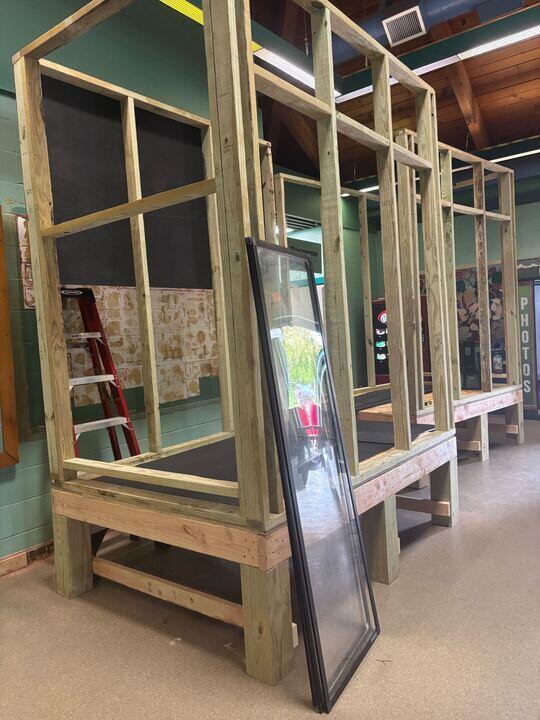
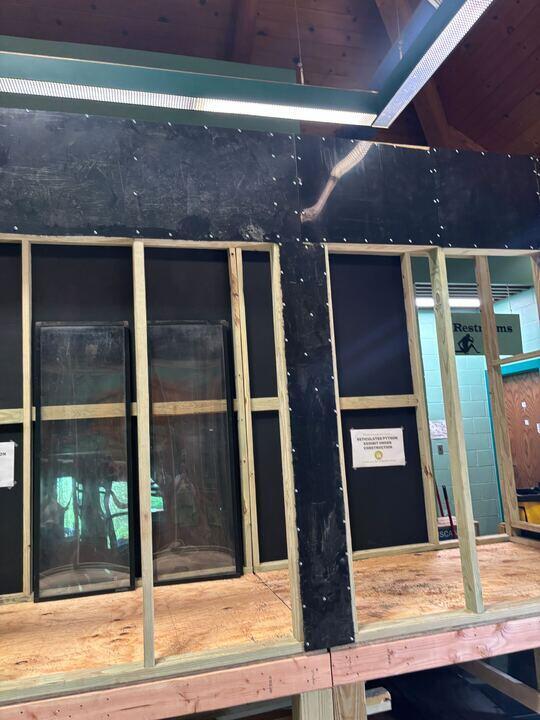
When you visit the zoo you may see modifications have been made to the exterior of the right side of the Australia building. This is so you can see the animals who live in that space ALL YEAR!
Sending the budgies to their new homes, bittersweet! Our animal care staff diligently cleaned and maintained their quarantine space for months while the flock was assessed for any possible fungal infections or other ailments . Taking care of 172 budgies is not a small task. Each budgie has a unique personality and seeing all of their beautiful colors and the hustle and bustle of a group that size is pretty fun.
🦜 Other Rescued Birds Most of the 170 budgies that came from SeaQuest have been rehomed with zoos better equipped for large flocks, while our colorful Eclectus parrots, Jalapeño and Habanero, will soon have a brand-new enclosure as part of our education programs.
Quarantine Days
Quarantine is boring—it looks boring, it sounds boring… because it is boring. Cement walls, cinder blocks, and mesh might not make for the most exciting visuals, but there’s a reason for it: everything in quarantine has to be easily sanitized. Every animal rescued from SeaQuest has to spend at least 30 days in these holding areas before they can join the rest of the zoo. For a majority of these animals – the space in quarantine, though small, was more space than they had access to in the mall in Roseville. From there, they must pass multiple health checks, including clean fecal tests and screenings to ensure they aren’t carrying any contagious illnesses. It may not be glamorous, but it’s absolutely essential for protecting our animals, our guests, and even your pets at home.
Veterinary Exams for All!
After arriving from SeaQuest, the rescued animals were carefully cycled through thorough veterinary evaluations. Many received x-rays, updated vaccinations, and treatments for internal parasites. While some records were provided by SeaQuest staff, many were incomplete or missing altogether, so our team conducted full assessments to ensure each animal’s needs were met. As animals cleared quarantine, they were slowly introduced to shared habitats. Keeping everyone safe—from our animals to our guests (and even their pets at home)—means making sure no “cooties” are passed along. It’s all part of providing responsible, compassionate care.
Keeper Micayla helps service and enrich all the birds that arrived in quarantine from SeaQuest Roseville. We were blessed to receive donated toys from Parrot Island and their customers. Our expert staff assessed nutritional needs for all of the nearly 200 birds and made sure they were getting everything they need on a daily basis.
What’s that smell, Danny? It’s fresh spring earth!